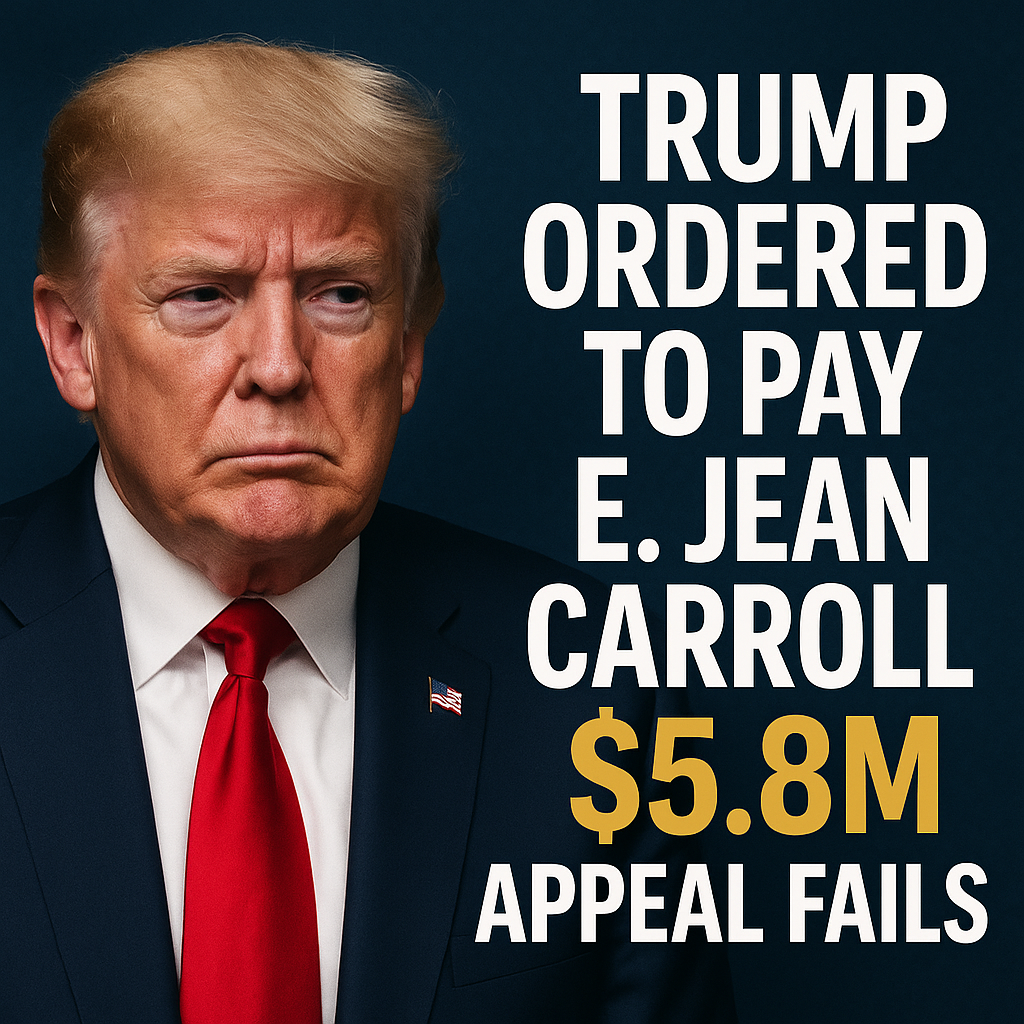
Trump Ordered to Pay E Jean Carroll $5.8M: Appeal Fails

Trump Ordered to Pay E. Jean Carroll $5.8 Million: Appeal Fails
Former President Donald Trump has been ordered to pay $5.8 million to writer E. Jean Carroll after a court upheld a jury’s verdict concerning allegations of sexual assault and defamation. This ruling emerges against a backdrop of continued legal battles for Trump, leaving many to ponder the implications of the decision and the broader context of accountability and justice.

The Court’s Decision and Legal Implications
The U.S. Court of Appeals for the Second Circuit affirmed the lower court’s ruling, challenging Trump’s claims of unfair treatment during the trial. The jury had found that Trump defamed Carroll after she accused him of sexual assault, leading to a significant financial penalty. Analysts note that this ruling not only underscores the judiciary’s role in handling such serious allegations but also reflects a shifting societal landscape where victims are increasingly encouraged to come forward.


While the appeals court-based its decision on the jury’s credibility in assessing the evidence against Trump, it emphasized the importance of legal recourse for victims of sexual violence. Critics of Trump’s approach have pointed out that this outcome may serve as a cautionary tale for public figures who undermine victims’ voices or dismiss serious allegations.


Diverging Perspectives on Accountability
The reaction to the ruling has sparked heated discussions across various platforms. Supporters of E. Jean Carroll view the decision as a moment of vindication and a potential shift in the narrative surrounding sexual misconduct allegations against powerful figures. Many advocacy groups have celebrated the court’s decision, framing it as a victory for survivors everywhere. They argue that it sends a clear message: accountability matters, regardless of one’s social status or political influence.
Conversely, some of Trump’s supporters dismiss the ruling as politically motivated. They argue that the former president has been subject to what they perceive as a relentless series of legal attacks designed to undermine his credibility and influence. This viewpoint highlights the polarization surrounding Trump’s legal troubles, reflecting broader societal divisions over issues of accountability and justice.
Implications for Future Cases
As Trump considers further legal options, including a potential Supreme Court appeal, the impact of this ruling will certainly reverberate through future legal proceedings involving high-profile figures. Legal experts suggest that the precedent set by the Carroll case could embolden other victims of abuse to pursue justice through the courts. It illustrates the judiciary’s willingness to uphold verdicts in cases involving allegations against influential individuals, potentially reshaping the treatment of similar cases in the future.
Additionally, the case has opened a dialogue about the public’s reception of allegations against political figures. With the growing amount of information available to the public on social media and dedicated news platforms, there is an ongoing conversation about how narratives are received and interpreted. The Carroll case embodies this complexity: while some view it as a victory for justice, others interpret it through a lens of partisanship and media bias.
Conclusion
The ruling ordering Donald Trump to pay E. Jean Carroll $5.8 million represents a significant chapter in the ongoing discourse around sexual misconduct, accountability, and the political ramifications of legal decisions. As the former president contemplates further legal avenues, the broader implications of this ruling will likely continue to resonate, influencing how society views accusations of sexual violence and the challenges involved in seeking justice—especially when powerful figures are involved.
In reflecting on this case, it’s crucial to recognize that the intersections of law, politics, and personal narratives create a complex tapestry that shapes how justice is sought and rendered in contemporary America. The evolving landscape of such high-profile cases points to a future where accountability may no longer be a distant hope for victims but a tangible reality.