US Strikes Iran Again as Trump Declares Ceasefire ‘Over’

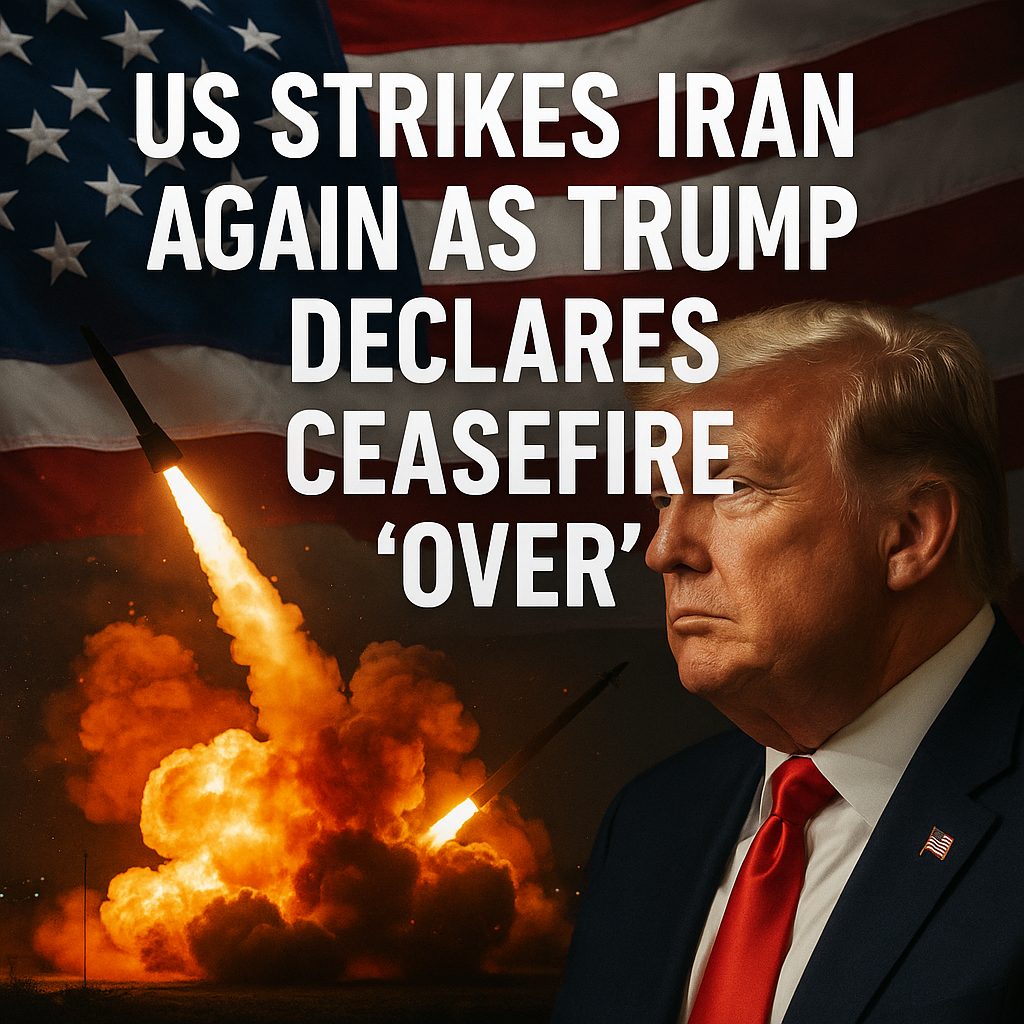
US Strikes Iran Again as Trump Declares Ceasefire ‘Over’
In a sudden escalation of tensions, the U.S. recently launched airstrikes against Iranian assets, marking a significant shift in the longstanding conflict between the two nations. Former President Donald Trump has declared that the ceasefire in the regional hostilities is “over,” prompting widespread concerns over the implications for U.S.-Iran relations and regional stability.

The Context of Renewed Conflict
The airstrikes were reportedly aimed at various locations tied to Iranian proxy forces, reflecting a strategy intended to curb Iran’s influence in the region. This operation follows a series of skirmishes and intensified rhetoric from both sides, with Trump’s statement signaling a readiness to abandon diplomatic engagements in favor of military actions. As reported by various sources, this incident has reignited debates over U.S. foreign policy and the precarious balance of power in the Middle East.


Observers note that this military action comes at a time when tensions are already high due to issues surrounding Iran’s nuclear program and its military activities across the region, which many perceive as a direct threat to U.S. interests and ally nations, particularly Israel and Saudi Arabia. The strikes not only reflect a tactical choice but also a broader strategic stance that prioritizes military deterrence over dialogue.


Diverse Perspectives on the U.S. Strategy
The recent U.S. strikes have drawn a variety of reactions. From a military standpoint, proponents argue that such actions are necessary to deter aggression and assert U.S. presence in a volatile region. The U.S. administration asserts that by targeting Iranian proxies, it aims to protect American forces and allies from potential threats. Navy veteran and defense analyst John Smith commented, “Our engagement sends a clear message: we won’t hesitate to defend our interests and partners in the world.”
However, critics of this strategy express concerns about the potential consequences of renewed military action. Analysts from Al Jazeera argue that rekindling hostilities could lead to a cycle of violence that destabilizes not just Iran, but the entire region. Furthermore, critics warn that such military strikes could undermine any ongoing efforts aimed at diplomatic resolutions and might provoke Iran into increased retaliatory actions.
Impacts on Regional Stability
The broader implications of these strikes are yet to unfold. Many fear that the actions could embolden militant groups in response, leading to an escalation of armed conflict throughout Iraq and Syria. Regional observers highlight that this ongoing cycle of military engagement can exacerbate sectarian tensions, further complicating the already delicate situation. As one Middle East expert cautioned, “Any military confrontation risks not just direct conflict with Iran but also igniting larger regional hostilities that could engage multiple states in a direct conflict.”
Moreover, Trump’s declaration highlights important political dynamics at play. The former president’s comments may resonate with a portion of the American populace that prioritizes a tough stance on foreign adversaries while alienating others who advocate for a more measured approach that emphasizes diplomatic avenues. This dichotomy showcases the complexities of U.S. foreign policy and the challenges of achieving a consensus even within domestic political circles.
Conclusion: Navigating the Uncertain Future
As the U.S. embarks on this renewed military engagement with Iran, the future of U.S.-Iran relations remains uncertain. While immediate military objectives may be clear, the long-term consequences of such actions are less so. Analysts and policymakers must navigate a landscape fraught with risks, balancing the need for national security with the imperative of stability across the Middle East.
With the current actions taken by the U.S. and the response anticipated from Iran, it is critical to adopt a watchful stance. The situation underscores the importance of continuous dialogue and reevaluation of strategies that consider both defensive posturing and the potential for diplomatic reconciliation, particularly in an era where global alliances and regional dynamics are in constant flux.