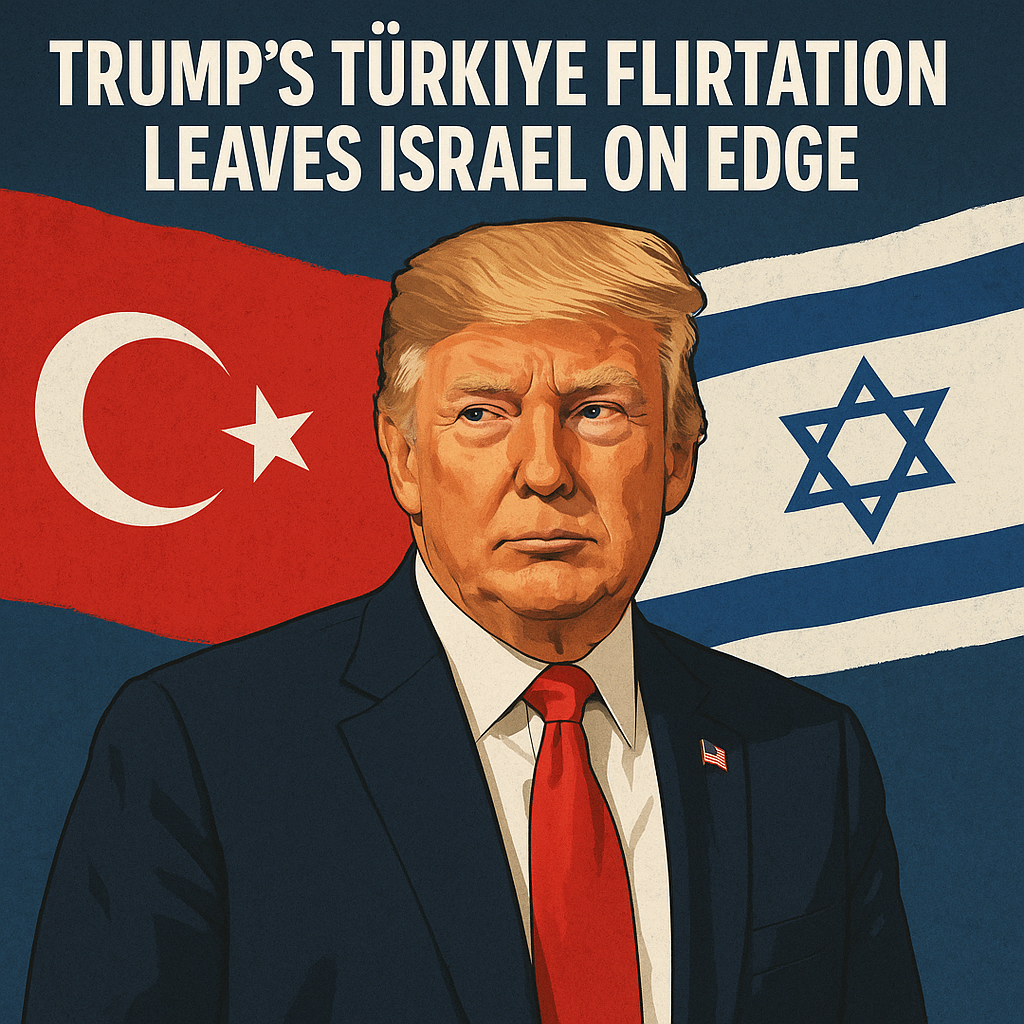
Trump’s Türkiye Flirtation Leaves Israel on Edge

Trump’s Türkiye Flirtation Leaves Israel on Edge
The recent rapprochement between former President Donald Trump and Türkiye has sparked concerns for Israel, highlighting the complex web of international relations in the region. As Trump navigates these geopolitical waters, reactions are mixed, revealing a landscape rife with both opportunity and uncertainty.

The Rationale Behind Trump’s Engagement with Türkiye
Trump’s re-emerging relationship with Türkiye can be understood through several lenses. Firstly, there is a strategic component. Türkiye, under President Recep Tayyip Erdoğan, has been a considerable player in the Middle East, often balancing relationships between Western powers and regional adversaries. Trump’s previous term saw fluctuating relations, but he now appears keen on rekindling those ties, emphasizing trade and military cooperation. This comes at a time when Türkiye faces its own economic challenges and seeks to bolster foreign investments.


Moreover, the alignment between Trump and Erdoğan hints at a shared interest in regional stability, or the illusion thereof. The potential for increased trade agreements and military collaborations might serve to bind Türkiye closer to the United States, positioning it as a counterweight to adversarial nations in the region.


However, this shift raises eyebrows in Jerusalem. Israel has historically viewed Türkiye’s role with skepticism, particularly concerning its engagement with Hamas and other entities perceived as threats to Israeli security. The anxiety stems from what this renewed partnership could mean for the balance of power in the Middle East.
Israel’s Concerns Over Renewed Ties
Israel’s apprehension about Trump’s flirtation with Türkiye is twofold. Firstly, there is a security concern. The Israeli government is wary that increased U.S.-Türk relations could embolden Türkiye to pursue policies that might undermine Israeli interests, particularly in Gaza and the West Bank. As Trump’s discourse has emphasized reasserting U.S. influence in the region, the fear is that this could inadvertently empower groups hostile to Israel.
Secondly, the ramifications on diplomatic fronts complicate Israel’s relationships with other regional players. The normalization agreements Israel signed with several Arab nations, dubbed the Abraham Accords, could face turbulence. Should Türkiye begin to mend fences with adversaries like Qatar and Iran through stronger ties to the U.S., Israel stands to lose the delicate equilibrium it has worked hard to achieve.
At the same time, some analysts suggest that Türkiye’s relationship with the U.S. under Trump could foster a more stable security environment. If Trump successfully navigates this relationship, it could lead to a broader coalition working toward common goals in the region, potentially mitigating some of the longstanding tensions between Israel and its neighbors.
The Diverging Views and Potential Outcomes
The contrasting perspectives on these developments are evident. On one hand, proponents of stronger U.S.-Türk ties argue that this could lead to increased stability in the Middle East, presenting an opportunity for de-escalation in various conflicts. They see a chance for a diplomatic window through which both Türkiye and the U.S. can exert positive influence on regional matters.
Conversely, critics assert that this could herald a return to polarization, where Israel’s security is compromised as Türkiye amasses regional clout under America’s aegis. They worry that Trump’s strategy might align more with populist rhetoric than with established diplomatic norms, potentially leading to unpredictable consequences that could upend years of carefully negotiated agreements.
The lack of consensus illustrates the complexity of Middle Eastern geopolitics. While some advocate for embracing the shifting alliances, others caution against the repercussions that come when grievances and historical animosities intertwine with contemporary politics.
Conclusion: Navigating the Uncertainty
Trump’s flirtation with Türkiye is emblematic of broader trends within international relations, revealing both the potential for collaboration and the risks of an evolving power dynamics. For Israel, the challenge lies in navigating this uncertain landscape as it weighs its security imperatives against the strategic alignments forming in the region. As developments unfold, it will be crucial for both U.S. and Israeli policymakers to remain vigilant and responsive to the growing complexities of their diplomatic environments. Ultimately, the stakes are high, and the quest for balance in this intricate web of diplomacy continues.