
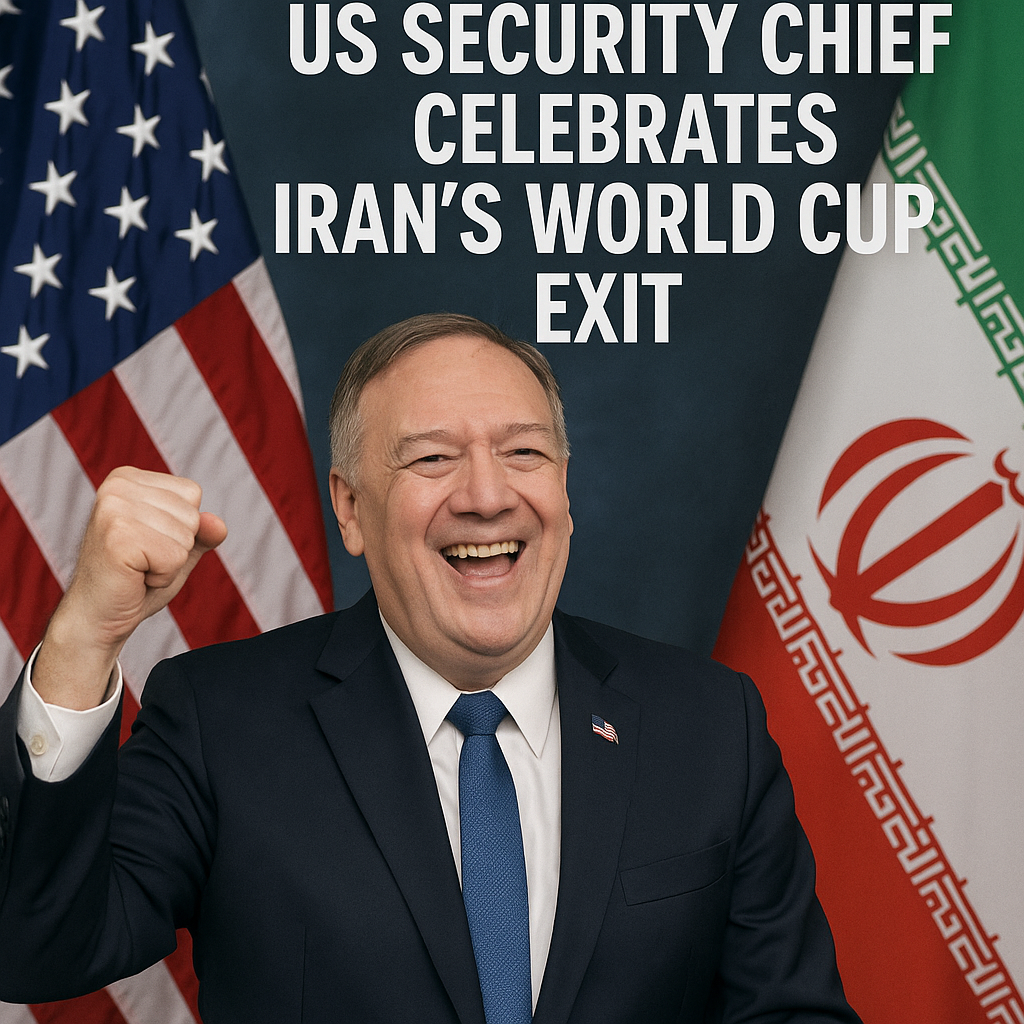
US Security Chief Celebrates Iran’s World Cup Exit
US Security Chief Celebrates Iran’s World Cup Exit
In a notable intersection of sports and geopolitics, the recent exit of Iran’s national football team from the FIFA World Cup drew attention beyond the pitch, particularly from U.S. security officials. Homeland Security Secretary Alejandro Mayorkas expressed a distinct sense of satisfaction regarding the outcome, which raises questions about the role of national security in the arena of international sports.

The Political Undertones of Sports
International sporting events like the World Cup often serve as a backdrop for broader political narratives. For the U.S., Iran has been a long-standing adversary, marked by geopolitical tensions that date back decades. Mayorkas’ comments can be seen as symbolic of a more extensive sentiment shared among U.S. officials; the performance of Iran’s national team has been perceived not just as a sporting event but as a reflection of the country’s political ethos and its international standing.

In an article by RT, Mayorkas was quoted saying, “The fact that they did not succeed represents a victory for our values.” This statement embodies the intertwining of sports with national identity and political outcomes. It indicates that, for some U.S. officials, the success or failure of foreign teams resonates on a more profound level than mere athletic competition.

Diverse Perspectives on the Celebration
However, reactions to Mayorkas’ comments have not been universally positive. Some critics argue that the triumphalism exhibited by U.S. officials undermines the spirit of sportsmanship that international competitions aim to promote. According to a piece from Al Jazeera, the celebration of another country’s failure could alienate potential dialogue opportunities, showcasing a need for a more nuanced approach in international relations.
Voices of Dissent
Several commentators have noted that turning a sporting event into a political battleground can detract from the unity and camaraderie that global competitions like the World Cup are meant to foster. As one perspective suggests, “The World Cup should transcend politics; it should be about celebrating human achievement.” This opinion captures the essence of the critique against conflating sports with international hostilities.
On the other hand, supporters of Mayorkas’ sentiments argue that success in international events can indeed carry political weight. They contend that a team’s failure might reflect internal issues within the country, such as public discontent or national dissent—the very elements that U.S. officials argue against authoritarian regimes like that of Iran.
The Complexity of Sports and National Identity
As the event concluded, the discussion expanded beyond mere sports into the realms of identity, culture, and diplomacy. National teams often represent not just a country’s athletic prowess but also its values and beliefs on a global platform. Thus, the reactions to the World Cup exit were multifaceted, encapsulating various emotions ranging from elation to disappointment.
Some experts believe that celebrating or lamenting the outcomes of such events is a reflection of deeper sentiments about a country’s governance and foreign policy stance. The contrasting views highlight that even in the realm of sports, narratives can shift dramatically based on geopolitical contexts and historical grievances.
Weighing the Implications
The debate over Mayorkas’ comments illustrates the pitfalls of merging sports with political agendas. Sports can sometimes act as a unifying force, a way to bridge divides, at least temporarily. Yet, when countries choose to celebrate the failings of their adversaries, it could fuel more division rather than foster understanding.
In assessing the outcomes of sports engagements in contexts such as these, it becomes clear that celebratory comments from officials can evoke mixed reactions. While some might view it as a victory for democracy and human rights, others fear it could deepen the animosity between nations.
Conclusion: A Call for Reflection
As the dust settles on this contentious episode, it prompts a larger conversation about how we engage with international sports. Should officials allow their political viewpoints to overshadow the global unifying spirit that these events embody? The exit of Iran’s team may have given U.S. leaders a moment of gratification, but it also calls for reflection on how sports can instead be a medium for dialogue and diplomacy rather than division. In navigating the complex interplay of politics and sports, perhaps the real victory lies in fostering understanding rather than celebrating failure.















