
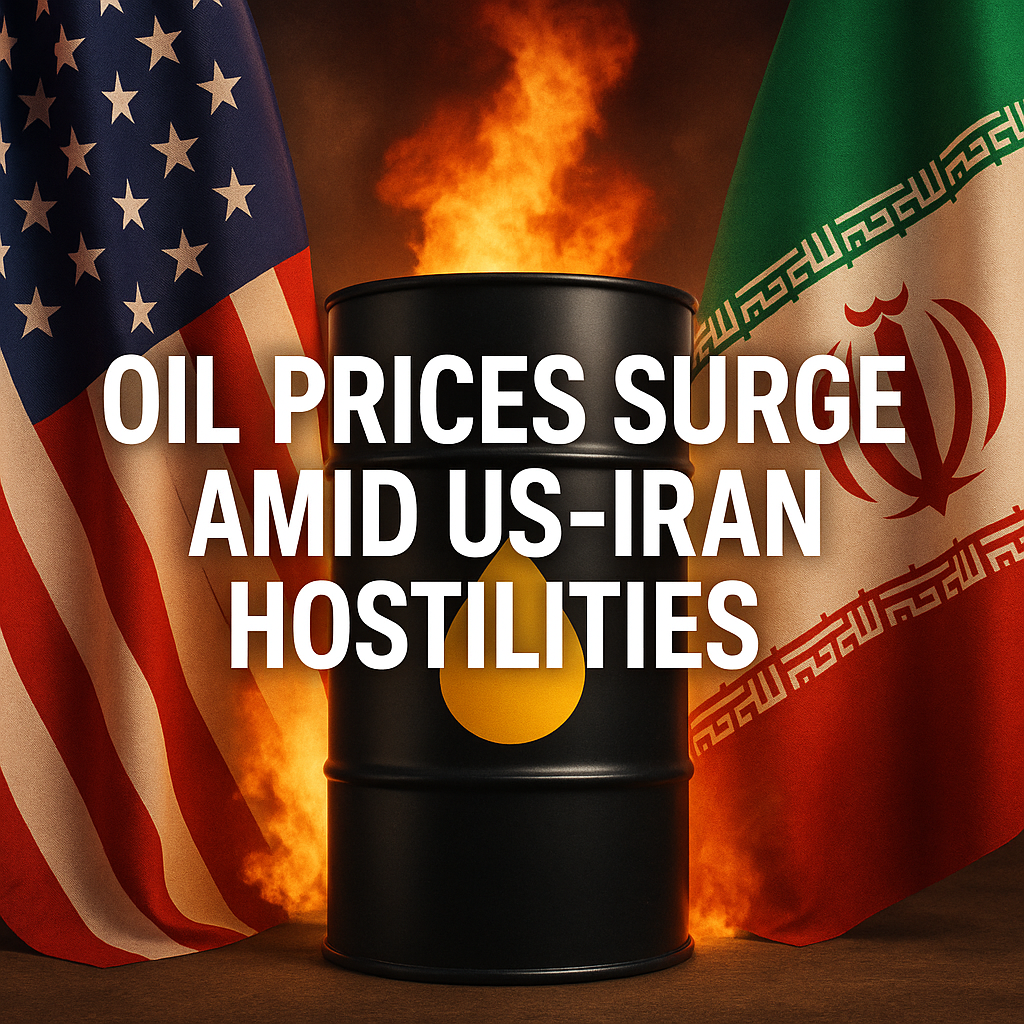
Oil Prices Surge Amid US-Iran Hostilities
Oil Prices Surge Amid US-Iran Hostilities
The ongoing tensions between the United States and Iran have led to a notable surge in oil prices, causing ripples throughout the global economy. This increase can be directly attributed to geopolitical uncertainties and fears of supply disruptions in the Middle East, a predominantly oil-rich region. Understanding the multifaceted reasons behind this escalation is essential for grasping the potential long-term implications for energy markets and broader economic health.

Geopolitical Tensions and Oil Prices
As diplomatic relations continue to fray and military posturing intensifies, the markets have reacted swiftly. According to reports from RT, the recent hostilities, marked by strategic moves and charged rhetoric, have instilled a sense of panic among traders. Oil prices surged to levels not seen in recent months, reflecting a growing concern over potential disruptions in oil supply from one of the world’s most volatile regions.

Key Factors Driving the Price Surge:
– Military Engagement: Increased military activity in the region often prompts a speculative spike in oil prices. Traders are reacting not only to current events but also to the historical context of past conflicts that have significantly affected oil supply.
– Market Sentiment: Psychological factors play a crucial role in pricing. Speculators and investors often adjust their positions based on perceived risks, thus contributing to price volatility.

Al Jazeera’s coverage expands on the impact of these tensions, noting that any escalation in hostilities could result in sanctions or military interventions, both of which would likely exacerbate the upward trend in oil prices. Such events have far-reaching implications, including potential ripple effects on global inflation and economic stability.
Economic Implications of Rising Oil Prices
The immediate impact of rising oil prices is felt in various sectors, with consumers and businesses alike grappling with increased costs. Higher oil prices typically lead to an uptick in transportation and manufacturing costs, which can then seep into the prices of goods and services.
Short-term Consequences:
– Transport and Logistics: Fuel costs are a substantial component of transportation expenses. Companies may resort to passing these costs onto consumers, thereby triggering inflationary trends.
– International Relations: Countries heavily reliant on oil imports may find themselves in a precarious position, potentially straining relations and altering trade dynamics.
However, the long-term consequences could be even more pronounced. The economic ramifications of sustained high oil prices include potential recession indicators, as consumers may reduce spending in response to rising fuel costs. Sky News emphasizes that the global economy has yet to fully recover from previous shocks, making the current environment particularly fragile.
Divergent Perspectives on the Future
Analysts have differing viewpoints on how the situation may evolve. Some experts believe that if diplomatic channels remain open, the potential for stabilization exists. However, contrasting perspectives suggest that further escalation is more likely, especially as both the U.S. and Iran exhibit hardened stances.
Future Scenarios:
– Diplomatic Resolution: Should negotiations lead to a de-escalation of tensions, oil prices could stabilize or even decrease, as fears of supply disruption lessen.
– Continued Hostility: Conversely, if hostilities worsen, prices could spike further, creating a cycle of geopolitical instability and economic distress that could last for years.
While the resolution of these tensions remains uncertain, one thing is clear: the convergence of geopolitical, economic, and market factors creates a complex landscape for oil prices. Investors and consumers alike must navigate these turbulent waters, adapting to the shifting tides of global affairs and energy economics.
In conclusion, the recent surge in oil prices due to U.S.-Iran hostilities underscores the intricate relationship between geopolitics and global markets. As the situation develops, it will be crucial for stakeholders to keep a close eye on both price trends and diplomatic efforts, as the interplay between these elements will have significant implications for the future.















