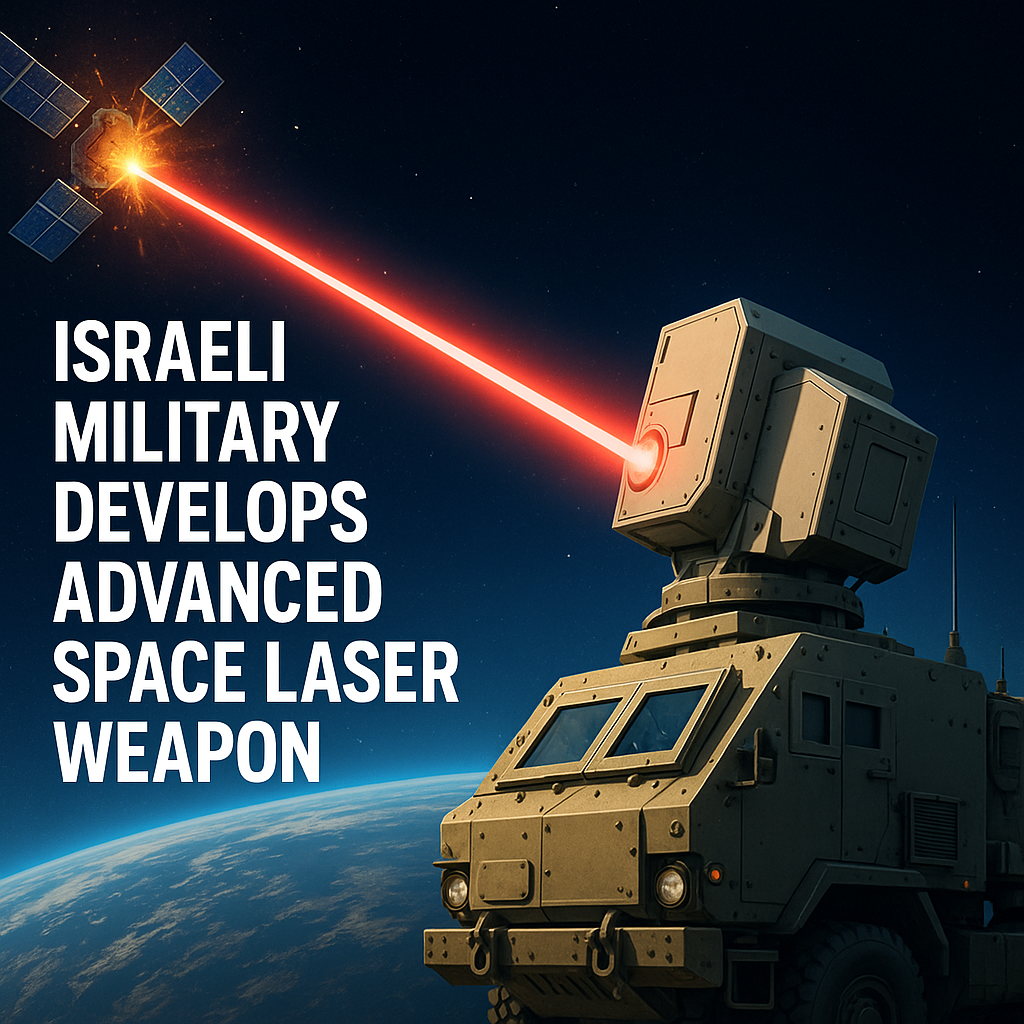
Israeli Military Develops Advanced Space Laser Weapon

Israeli Military Develops Advanced Space Laser Weapon
Recent advancements in military technology have painted a significant portrait of modern conflict, notably through Israel’s development of an advanced space laser weapon system. This high-tech initiative reflects a broader trend among nations prioritizing cutting-edge defense methods in an era where traditional military strategies are increasingly complemented—or even replaced—by innovative technologies.

The Technological Leap: What We Know
The Israeli military’s new space laser weapon aims to enhance its defense capabilities against airborne threats. Charged with the mission of intercepting drones and missiles, this system is part of Israel’s broader defense strategy, which has historically relied on advanced technological integration. According to reports from various sources, including RT, this project will not only serve Israeli military interests but also align with Israel’s commitments to regional security.


The development is said to occur amid increasing tensions in the Middle East, which, as noted by Al Jazeera, calls for a reevaluation of defensive measures. These lasers are touted to require significantly less operational cost compared to traditional projectile-based systems, offering the prospect of sustained defense without the recurring expenses of intercept missiles.


Analyzing Perspectives: Supporters vs. Critics
Supporters of Israel’s initiative highlight the military’s proactive approach to neutralizing threats. The potential for space-based systems to take on a new role in national security is seen as a vital response to evolving warfare dynamics. Proponents argue that these systems could increase Israel’s deterrence capabilities against adversaries, some of whom have developed advanced drone technology threatening Israeli airspace.
However, critics cast a wary eye on the implications of such developments. Skeptics point out that the militarization of space could lead to an arms race, escalating conflicts rather than resolving them. Al Jazeera’s coverage emphasizes that concerns around international regulations regarding space weaponization are both valid and pressing. As nations begin to weaponize outer space, the issue of endorsement from global frameworks becomes increasingly significant. Critics argue that while enhancing defense capabilities is essential, it should not come at the cost of global peace and stability.
Future Implications: A Double-Edged Sword
As Israel progresses with its laser system, the question arises: what does this mean for future conflicts? The advancing technology signifies not a mere enhancement of existing systems but potentially a transformation in warfare strategies. This change might compel other countries to match those advancements, fostering an environment where military engagement becomes more complicated due to technological superiority.
Moreover, as indicated in additional analyses from Sky News, the implications transcend national borders, sparking concerns among global powers, including China and the United States, who may feel pressured to expedite their own military advancements. The competitive nature of military innovation could foster an unpredictable landscape in international relations.
In conclusion, while the Israeli military’s advancements signify a remarkable pivot towards sophisticated defense systems, this move serves as a double-edged sword. The capacity for enhanced protection comes with the burden of ethical concerns surrounding the militarization of space and the potential for escalating arms races. As nations navigate this new frontier, the need for international dialogue and legal frameworks will be more crucial than ever in mitigating conflict escalations driven by these technological leaps. Understanding this complexity is key to addressing both security and peace in an unprecedentedly advanced military era.