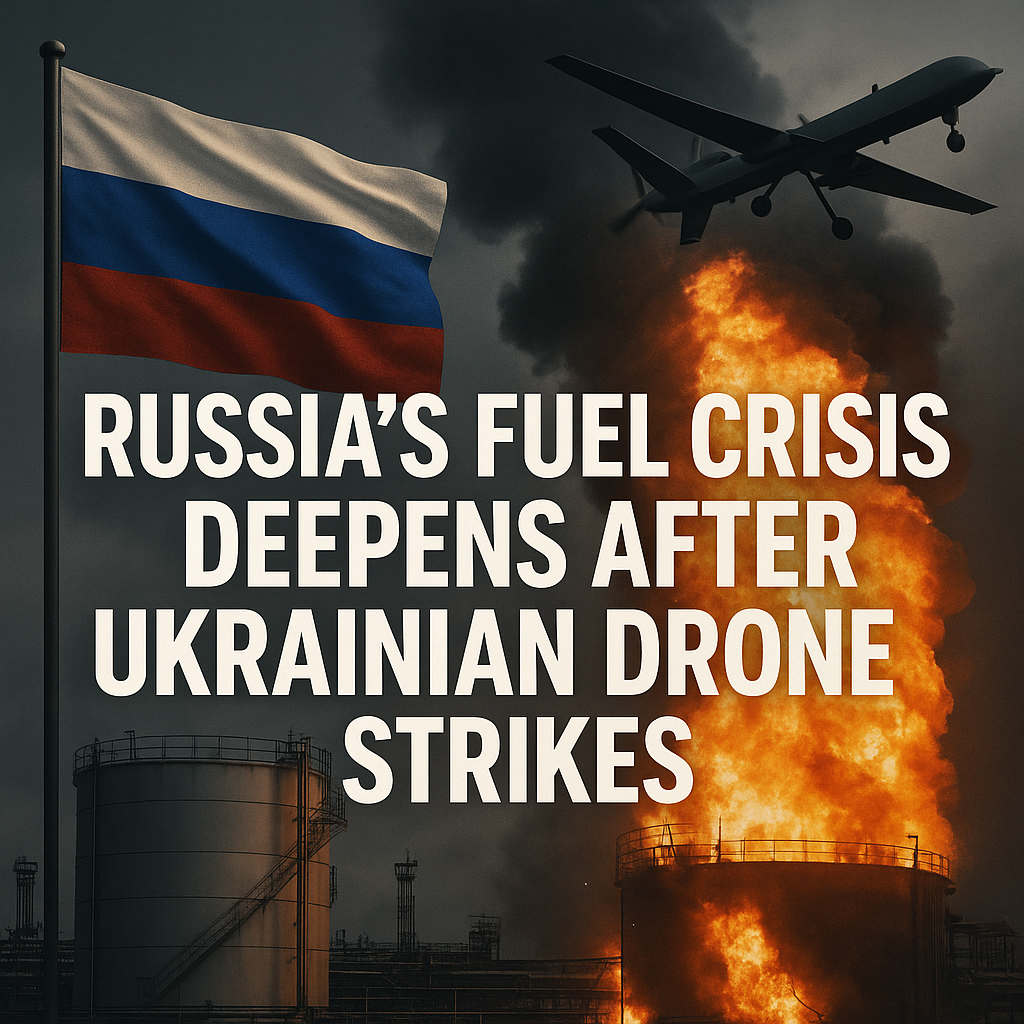
Russia’s Fuel Crisis Deepens After Ukrainian Drone Strikes

Russia’s Fuel Crisis Deepens After Ukrainian Drone Strikes

Russia’s fuel crisis appears to be intensifying in the wake of escalating Ukrainian drone strikes, disrupting supply chains and highlighting vulnerabilities in its energy infrastructure. As the conflict deepens, both nations are grappling with the implications of these assaults on their economy and military capabilities.


The Drivers Behind the Fuel Crisis
Recent attacks on Russian oil depots have likely exacerbated an already delicate situation for the country. According to reports, drone strikes targeting fuel storage facilities in Crimea have led to significant damage. The Ukrainian government maintains that targeting these resources is essential in weakening Russia’s military logistics. The strikes not only aim to disrupt fuel supplies for the Russian military but also represent a strategic move to undermine Russia’s war efforts economically.


In light of the ongoing war, the Russian government faces mounting challenges in sustaining fuel production and distribution. Data from various analysts suggest that capacity utilization at oil refineries has dropped, particularly in regions facing drone threats. This decline in production capabilities is compounded by sanctions that limit Russia’s access to Western technology and markets. The domino effect seems evident: reduced fuel supplies potentially lead to higher prices domestically and contribute to inflationary pressures, complicating an already difficult economic scenario.
The Broader Economic Impact
The impact of Russia’s fuel crisis extends beyond military logistics. Economists warn of potential repercussions for the Russian economy as a whole. The energy sector is a cornerstone of Russia’s economy, and disruptions in production or distribution can lead to far-reaching consequences. Businesses reliant on fuel for transportation and operations are now facing increased costs. This could lead to a contraction in economic activity, raising the risk of recession in the foreseeable future.
Simultaneously, various news outlets have reported on rising tensions among Russian citizens regarding fuel prices. Public sentiment appears to be shifting as constraints on supply begin to affect day-to-day life. While the government has historically maintained tight control over fuel prices, sustained disruptions might force it to reconsider its approach, possibly leading to civil unrest. The irony lies in the fact that these pressures come at a time when Russia has been seeking to consolidate power over its energy resources, both domestically and abroad.
A Divided Stance on the Conflict’s Progression
While some analysts predict that the drone strikes could potentially shift the tide in favor of Ukraine, others are more cautious. A segment of experts suggests that Russia, despite the immediate setbacks, may find ways to adapt. They argue that the nation’s extensive geographic landscape and resource wealth can provide alternative solutions to mitigate these crises. This viewpoint emphasizes resilience, suggesting that a temporary setback in fuel production might not derange Russia’s overall military strategy in the long term.
Conversely, some analysts firmly believe that the recent Ukrainian drone operations could signify a turning point. They underscore that targeting energy infrastructure could lead not only to military advantage but also to a broader weakening of Russian morale. The idea is that if civilians begin to feel the pressure of fuel shortages and rising costs, the Kremlin may face increased internal dissent, challenging its grip on power.
Looking Ahead: Strategic Ramifications
As the situation unfolds, it is clear that both countries are looking for strategic advantages. Ukraine is motivated to capitalize on these fleeting opportunities to weaken its adversary, while Russia must recalibrate its energy policies to cushion the immediate impact of these drone strikes. The significance of energy production in warfare has never been clearer.
Furthermore, the international community is keenly observing the development of this crisis, pondering its implications for global energy markets. A sustained crisis in Russian fuel supplies could have ripple effects that extend well beyond the region, affecting energy prices and geopolitical alliances. Countries reliant on Russian energy, particularly in Europe, will need to reassess their energy security strategies in light of this evolving scenario.
In conclusion, Russia’s fuel crisis, fueled by Ukrainian drone strikes, serves as a poignant reminder of the intertwined nature of energy and warfare. While the immediate implications are stark, the long-term ramifications could reshape not only the ongoing conflict but also the geopolitical landscape in energy consumption and security. The events that unfold in the coming weeks will likely determine the trajectory of both Russia’s energy sector and the broader conflict itself.