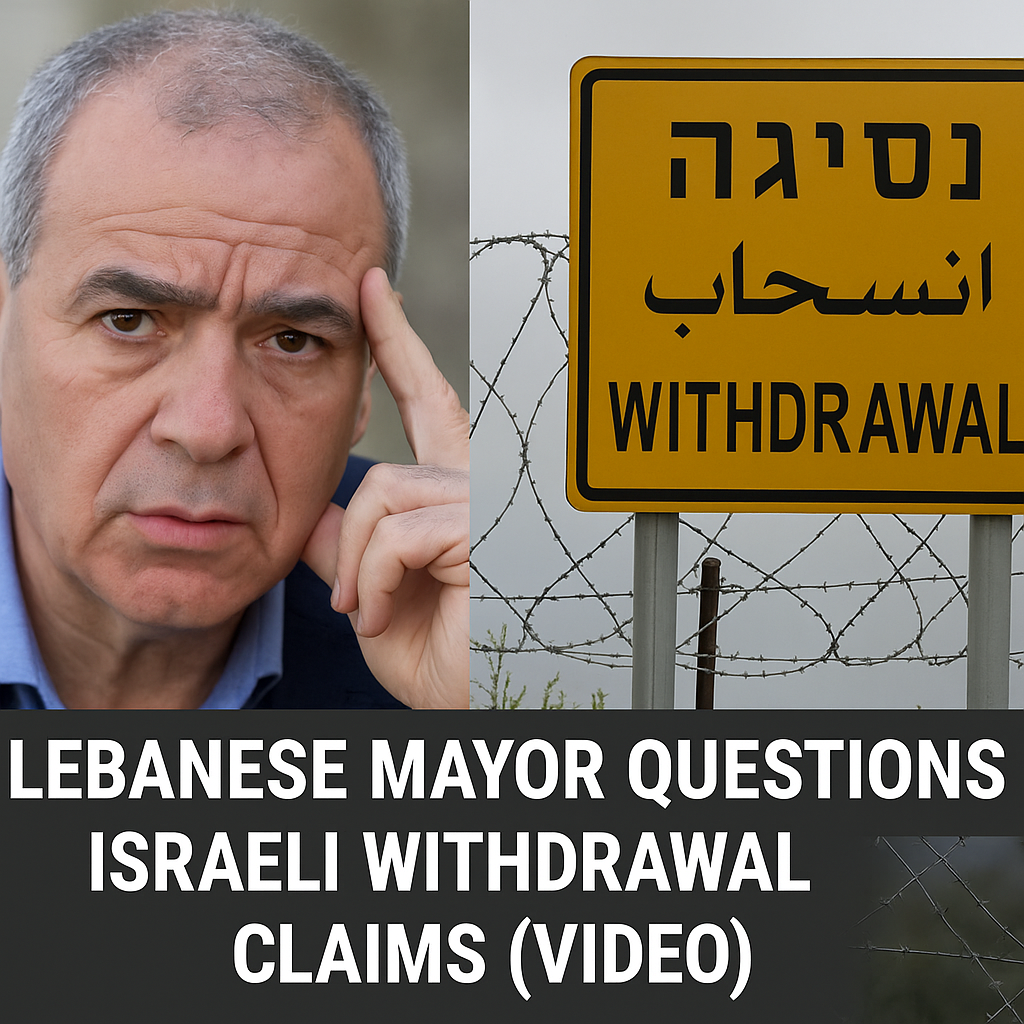
Lebanese Mayor Questions Israeli Withdrawal Claims (VIDEO)

Lebanese Mayor Questions Israeli Withdrawal Claims
The geopolitical landscape in the Middle East is often characterized by complex relationships, fluctuating alliances, and contentious territorial disputes. Recently, a Lebanese mayor has added another layer of intrigue to this narrative by openly questioning Israel’s claims regarding its planned military withdrawal from southern Lebanon. This move has rekindled discussions about sovereignty, security, and the residual distrust that lingers in the region.

Background on the Withdrawal Claims
In response to ongoing tensions, Israel has stated its intention to withdraw from areas in southern Lebanon, citing security concerns and a desire for peace. However, this announcement hasn’t been universally accepted or interpreted positively. “Statements about withdrawal often come with caveats, including the notion of maintaining security arrangements on the ground,” noted Ali Kahn, an analyst quoted in a recent report.


The Lebanese mayor, representing a community directly impacted by these claims, expressed skepticism about Israel’s intentions. He argued that previous withdrawals had not resulted in lasting peace or stability, thereby questioning the legitimacy of Israel’s current assertions. This sentiment reflects broader apprehension among Lebanese officials and the public concerning Israel’s true motives.


Diverging Perspectives on Regional Stability
While Israeli officials maintain that their withdrawal is a step towards fostering regional stability, Lebanese leaders are more cautious, pointing to historical patterns of behavior. For instance, in the past, Israeli withdrawals have often led to increased tensions rather than resolution. Khaled Askar, a local political analyst, suggested that “the rhetoric around withdrawal lacks substance, especially when seen through the lens of history.”
This skeptical outlook is compounded by the ongoing presence of armed groups in the region, notably Hezbollah. Analysts note that these groups are perceived as both a defense against Israeli incursions and a complicating factor in negotiations. The Lebanese mayor remarked, “We see how similar claims of withdrawal have devolved into deeper conflict, further entrenching divisions rather than bridging gaps.”
The Role of International Observers
Interestingly, international observers are divided on the implications of Israel’s withdrawal claims. While some view it as a potential first step towards peaceful negotiations, others regard it as a tactical maneuver intended to reassess military strength and presence without relinquishing control. “The international community must tread carefully in interpreting these movements; there’s always more than meets the eye,” said Anya Patel, a Middle Eastern relations expert.
Reports from various sources illustrate the complexity of the situation. Whereas publications like Al Jazeera focus on the human impact, emphasizing the fears of Lebanese communities, others maintain a more strategic outlook, analyzing Israel’s military positioning. This multifaceted reporting underscores the need for a nuanced understanding of the realities on the ground.
Conclusion: A Complex Path Forward
The statements from the Lebanese mayor reflect a broader, deeply rooted skepticism about Israel’s motives and actions in the region. The questions surrounding the legitimacy of withdrawal claims, intertwined with historical grievances and real-time threats, create a complex tableau of distrust among stakeholders. Discussions around these issues are essential, as they illuminate the myriad ways in which history, politics, and security concerns shape the future of Lebanon and its relationship with Israel.
Ultimately, the road ahead is fraught with challenges. As both Israeli and Lebanese leaders navigate this terrain, the hopes for genuine peace remain precarious, susceptible to the influences of past injustices and current realities. Thus, as citizens and leaders engage in dialogue, it’s critical to remain vigilant and informed, recognizing that every claim carries weight and every skepticism is born from a history that cannot be overlooked.