
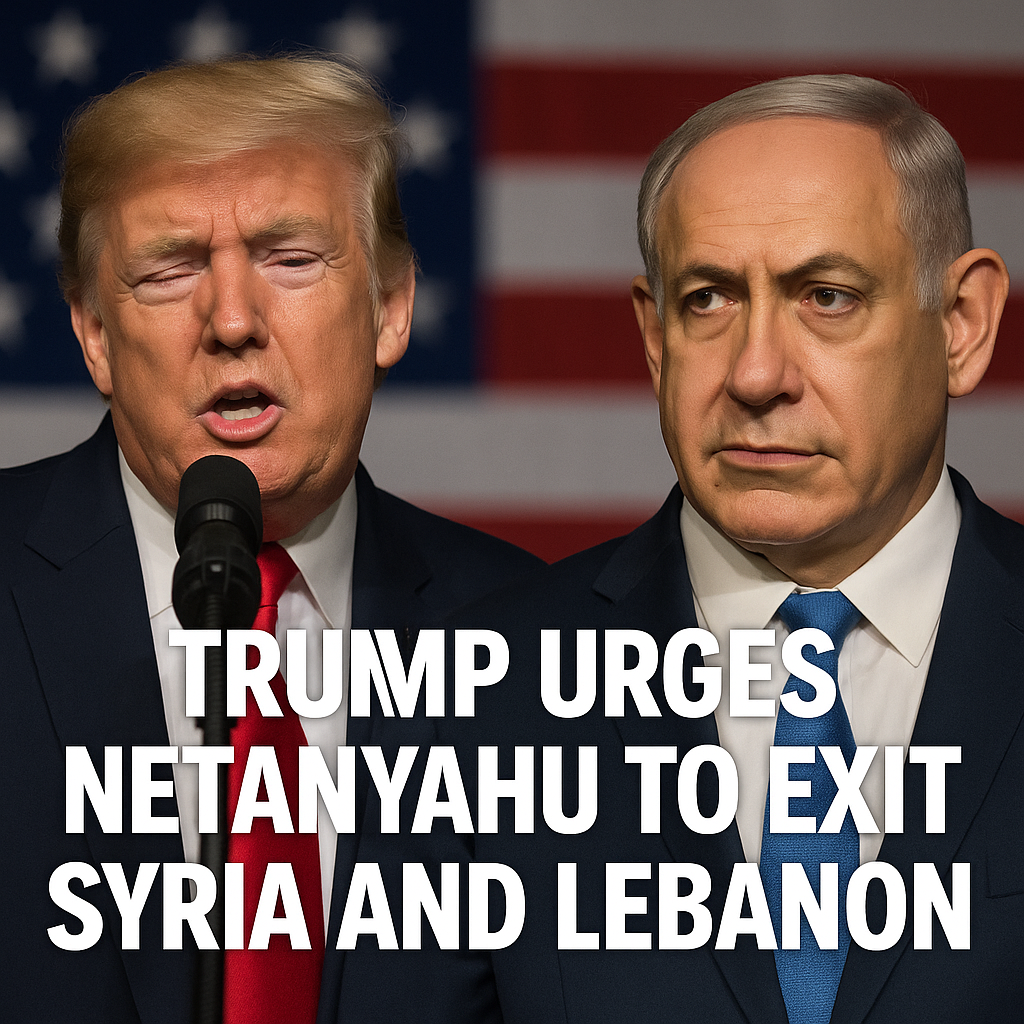
Trump Urges Netanyahu to Exit Syria and Lebanon
Trump Urges Netanyahu to Exit Syria and Lebanon: A Geopolitical Rethink
In a significant diplomatic move, former President Donald Trump has urged Israeli Prime Minister Benjamin Netanyahu to exit both Syria and Lebanon, a proposition that could reshape the already complex geopolitical landscape in the Middle East. This call has elicited varied reactions and poses profound implications for the region’s stability, Israeli defense strategy, and U.S.-Israel relations.

The Context of Trump’s Urging
Trump’s comments stem from a broader critique of U.S. military involvement in the Middle East, as well as the ongoing conflicts that have plagued the region for decades. With an eye toward the 2024 presidential election, Trump is attempting to position himself as a peace-focused alternative to current U.S. foreign policy, which has often leaned heavily on military solutions.

Supporters of Trump’s position argue that a withdrawal would save lives and resources, potentially opening pathways for new diplomatic engagements. They assert that Israel has faced enough military strife, and disengaging from Lebanon and Syria could allow for redirected focus on domestic issues or pressing conflicts elsewhere.

On the flip side, critics assert that a hasty retreat could empower hostile groups such as Hezbollah and Iranian forces present in the area, possibly leading to a power vacuum that could destabilize Israel’s northern border. The fear is that such an exit might embolden adversaries and leave Israel vulnerable to increased military threats.
Diverse Perspectives on the Urging
Several international actors and analysts have reacted to Trump’s urging, reflecting a spectrum of viewpoints rooted in historical context and strategic implications.
1. Support for Withdrawal:
– Proponents highlight the exhaustion stemming from protracted military engagements and the merits of a more isolationist approach. They advocate for a strategy that prioritizes diplomacy over military actions, stating, “A withdrawal would signal that the era of military interventions is over and provide a fresh start for peace negotiations.”
– Trump’s inclination aligns with a growing sentiment among certain U.S. constituents who feel disenchanted with lengthy military involvements abroad.
2. Concerns over Security:
– Conversely, opponents of the withdrawal emphasize the risks associated with abandoning allies in the region. Experts argue that without the presence of Israeli forces, groups like Hezbollah would likely gain more foothold, jeopardizing not only Israel’s security but also that of U.S. interests in the Middle East.
– Former military officials have warned that a sudden exit might ignite further conflicts. As one analyst noted, “The time for withdrawal must be calculated and strategic; abandoning the region could have repercussions that extend far beyond just Israel.”
The Broader Implications
The call for Netanyahu to exit Syria and Lebanon invites questions about not only Israeli defense policy but also the role of the U.S. in the Middle East. The ramifications of such a withdrawal could have ripple effects through various political alliances and counter-terrorism strategies in the region.
A shift toward a less interventionist approach from Israel, backed by support from the U.S., may also signal a pivot in how regional players interact with one another. For instance, Iran’s influence could expand significantly in this scenario, complicating efforts to combat its regional ambitions. Furthermore, such a strategy might embolden Sunni Arab nations who are wary of Iranian expansion, leading to new dynamics in the fragile Sunni-Shiite balance.
Conclusion: A Complex Path Ahead
As Trump advocates for an Israeli pullback from Syria and Lebanon, the complexities of geopolitical realities emerge even more strongly than before. While there are substantial arguments to consider regarding military disengagement, weighing these against the potential security risks is equally crucial.
Ultimately, the path ahead requires not only tactical calculations but also a renewed commitment to diplomacy that transcends military paradigms. The outcome of Netanyahu’s potential decisions, influenced by Trump’s entreaties, will remain a focal point for further discussions and developments within the international community. Understanding the multi-layered implications of this dialogue is essential for anyone invested in the future of Middle Eastern politics.















