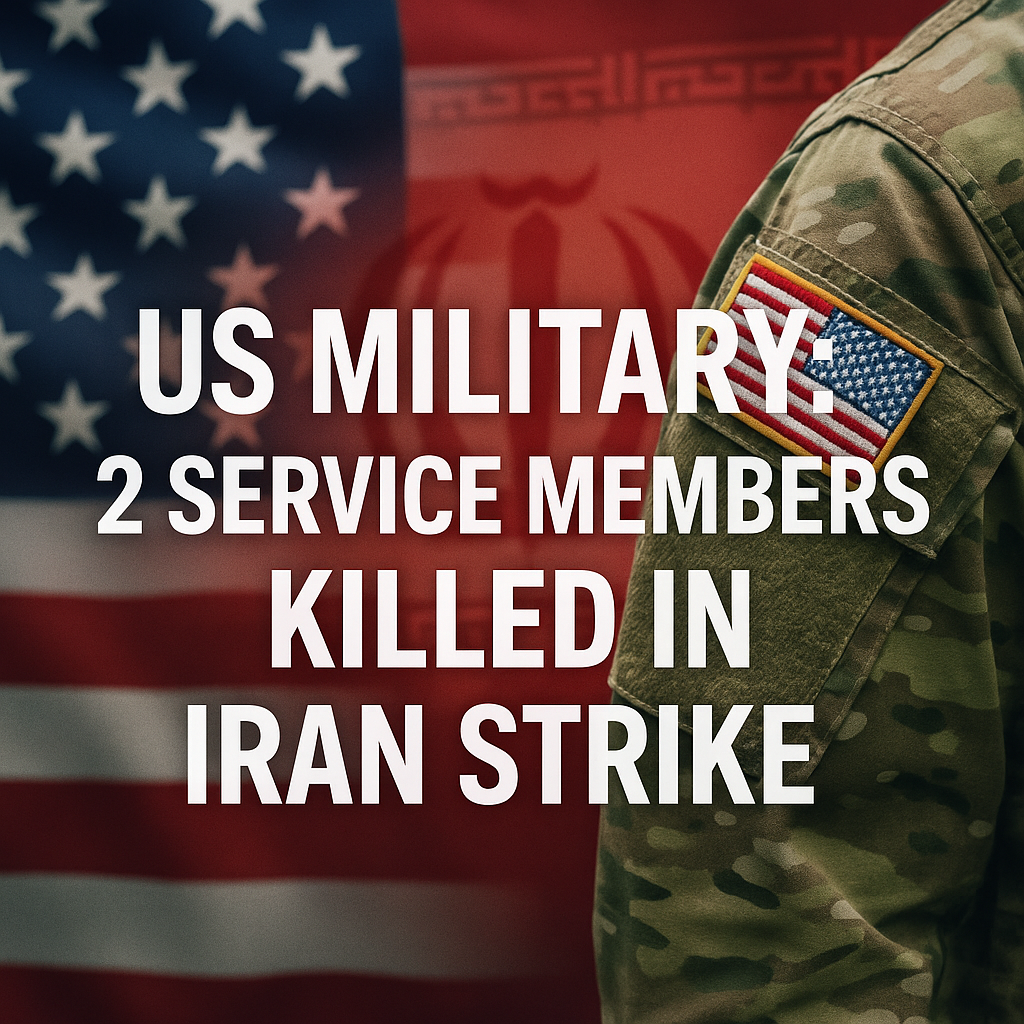
US Military: 2 Service Members Killed in Iran Strike
Recent U.S. Military Losses: Two Service Members Killed in Iranian Strike
In a tragic escalation of tensions within the Middle East, recent reports confirm that two U.S. service members were killed in a strike attributed to Iranian forces in Jordan. This incident reignites discussions around military presence in volatile regions and the complex geopolitical relationships involved.

The Incident: Details and Reactions
According to Al Jazeera, the casualties occurred during a supposed Iranian operation in the region, drawing sharp reactions from U.S. officials and military representatives. High-ranking military leaders condemned the attack, emphasizing the unforeseeable risks faced by service members in overseas deployments. The U.S. government has vowed to investigate the circumstances surrounding the incident and to hold accountable those responsible.

Contrastingly, RT presents a more critical perspective on U.S. military actions in the Middle East. The outlet highlights Iran’s arguments for its military actions as a form of defense against foreign presence in the region. Iranian officials have long claimed that the U.S. military’s operations are seen as provocations—an assertion that fuels ongoing tensions between the two nations.

As the details of this incident come to light, various stakeholders are weighing in, providing differing interpretations that highlight the complexities of U.S.-Iran relations.
Implications for U.S. Military Strategy
The deaths of the service members raise crucial questions about U.S. military strategy in the Middle East. Proponents of a stronger military footprint argue that a robust presence is necessary to deter Iranian aggression and maintain regional stability. They posit that such military endeavors are essential to safeguard not only U.S. interests but also allies in the region.
On the other hand, critics caution against further military escalation. Many experts argue that increasing troop deployments could exacerbate tensions rather than alleviate them. The notion that military intervention leads to long-term solutions is regularly challenged, as historical evidence suggests that military actions often result in greater instability. This duality in viewpoints reflects broader debates within U.S. foreign policy circles.
Furthermore, the human cost of military engagement cannot be overlooked. The emotional toll on service members and their families, highlighted by this incident, becomes poignant in discussions about national security. Advocates for peace often cite sacrifices made by military personnel as a compelling reason to pursue diplomatic resolutions rather than military actions.
What Comes Next?
In the aftermath of this tragic event, the U.S. military and government will likely reevaluate their strategies and the risks involved in maintaining a presence in the region. Congress may also engage in intense discussions regarding military involvement in the Middle East, balancing national security interests with the imperative to minimize loss of life among service members.
Critics of interventionist policies may leverage this incident to call for a reassessment of U.S. engagements abroad. Multiple parties argue for a shift toward diplomatic efforts that prioritize dialogue over military confrontation, recognizing that lasting peace cannot be achieved through force alone. Yet, it remains uncertain whether such an approach can gain sufficient traction in a polarized political landscape.
Conclusion: A Call for Reflection
The deaths of the two service members in the Iranian strike underscore the precarious nature of U.S. military operations in geopolitically fraught areas. As the nation grapples with the implications of this tragedy, it serves as a sobering reminder of the human cost associated with foreign interventions. This incident not only challenges prevailing military strategies but also calls for a nuanced understanding of the complexities of international relations in the modern age.
Ultimately, the conversations that emerge in the days and weeks ahead will reflect broader sentiments about U.S. military presence and the urgent need for balanced approaches to international conflicts. As policymakers, military leaders, and citizens engage in this dialogue, the lessons drawn from this tragic event may guide future actions in a region where consequences are often profound and lasting.