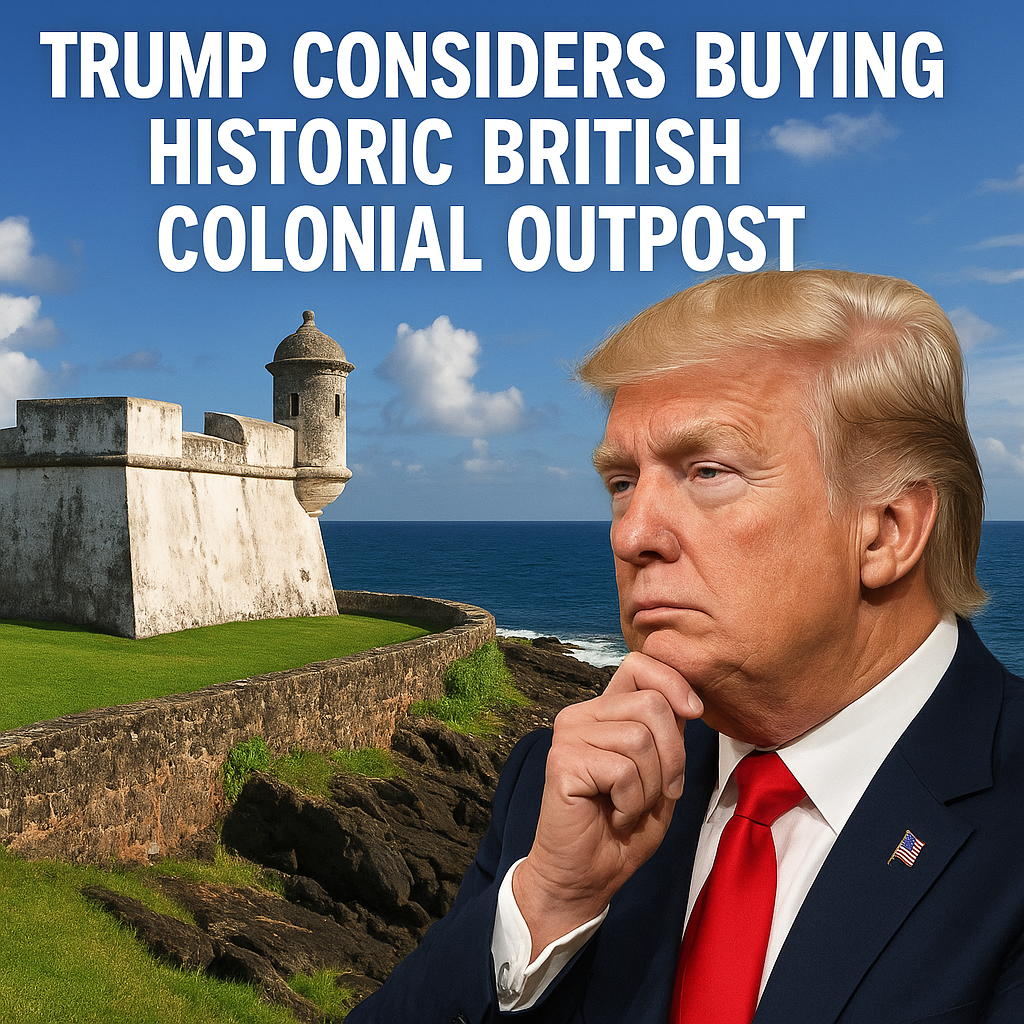
Trump Considers Buying Historic British Colonial Outpost

Trump Considers Buying Historic British Colonial Outpost

Former President Donald Trump has reportedly shown interest in purchasing the Chagos Islands, a remote archipelago in the Indian Ocean that has a complicated history rooted in colonialism and U.S. military presence. This marked contemplation raises questions about international law, colonial legacies, and the geopolitical strife surrounding military bases, emphasizing a convoluted narrative that encompasses legal, ethical, and strategic dimensions.


A Brief History of the Chagos Islands
The Chagos Islands were part of British territory until the United Kingdom expelled the indigenous population in the 1960s to make way for a U.S. military base on Diego Garcia, the largest island in the chain. This base plays a strategic role in American military operations, acting as a critical staging ground for activities in the Middle East and Africa. The British government’s actions have since drawn substantial criticism, particularly regarding the plight of the Chagossians, who were forcibly removed from their homeland and have struggled for justice and the right to return.


Despite the historical background, the strategic importance of the Chagos Islands continues to attract attention, especially within U.S. foreign policy contexts. This colonial connection, combined with ongoing geopolitical tensions, enhances the complexity surrounding Trump’s intentions.
Trump’s Proposal: Motivations and Implications
Recent reports suggest that Trump’s interest in acquiring the Chagos Islands could be fueled by a mix of nostalgia and practical military strategy. While some sources argue that the former president envisions establishing a larger U.S. footprint in the Indian Ocean, others question the legal feasibility of such a purchase given the current international treaties and British sovereignty over the islands.
– Strategic Military Presence: Proponents of the idea consider that expanding U.S. control over the islands could strengthen military operations in a region marked by rising tensions with China and Russia. The United States already utilizes Diego Garcia extensively for air operations, and increasing permanent facilities could enhance capabilities in the face of shifting global dynamics.
– Colonial Legacies: Contrarily, critics of the proposal highlight the deeply entrenched colonial history associated with the islands. Acquiring the Chagos could be viewed as an extension of the very imperialism that marginalized the indigenous population. Activists and human rights organizations contend that such a transaction would deepen historical injustices and overlook the Chagossians’ longstanding claims to their homeland.
Mixed Reactions from Experts and Leaders
The international community has responded with a mix of skepticism and caution regarding Trump’s idea. On one hand, some geopolitical analysts suggest the move aligns with a broader trend of asserting control over key maritime chokepoints, particularly as China expands its naval capabilities in the Indian Ocean. As one analyst remarked, “Gaining a foothold in the Chagos would give the U.S. a significant advantage in countering influence in the region.”
On the other hand, legal experts warn that any attempted acquisition could be fraught with challenges. The United Nations has consistently maintained that the sovereignty of the Chagos Islands belongs to Mauritius, which has sought their return since gaining independence from British rule. The legal disputes surrounding the islands could become a point of contention on the international stage, leading to diplomatic friction between the U.S. and allies in the region, particularly the UK and Mauritius.
Ethical Considerations of Colonialism
The potential purchase raises profound ethical questions. The legacy of the British Empire is still felt in many territories across the globe, and Trump’s bold proposal might exacerbate feelings of disenfranchisement among those affected by such histories. The question of how modern nations reconcile with their colonial past is particularly pertinent in this case.
In response to Trump’s announcement, some Chagossians have expressed hope that their voices will be heard in any decision-making process regarding their former home. As one Chagossian leader noted, “It’s not just land; it’s our identity. No one should control the Chagos Islands without our input.”
Conclusion
Trump’s consideration of purchasing the Chagos Islands is more than a mere economic or military strategy; it is an intersection of history, ethics, and international relations. The implications extend far beyond the transactional nature of such a proposal, inviting a global dialogue on colonial legacies, sovereignty, and the rights of indigenous peoples. As discussions unfold, it remains essential to approach the topic with a nuanced understanding of its complexity and a commitment to justice for all impacted.